

The Quick Read
Grassroots football is entering the AI age - and coaches are divided. Some see it as cheating. Others see it as the analyst they never had. The truth? It puts every answer at your fingertips - so you can spend less time searching and more time coaching.
Key Intelligence
30-Second Summary
Grassroots football coaches are increasingly divided on AI. Some see tools that analyse match data and surface trends as empowering - democratising insights that used to require full-time analysts. Others worry it encourages lazy coaching or over-reliance on algorithms. The research is clear: AI-based interventions show significant positive effects on performance and injury prevention. But the experts agree on one thing - AI should inform decisions, never make them. The coach stays in charge. The technology just makes them better informed.
The Signal
Arsène Wenger doesn't do interviews about football technology lightly. So when the man who revolutionised English football's approach to sports science sat down last month to discuss AI, coaches paid attention.
His verdict was characteristically precise:
AI has a fantastic quality: it can absorb millions of different situations and give you an answer in a second, or even a fraction of a second.
Wenger does however go on to caveat this with a warning that defines the entire debate:
As long as a human being keeps control, authority, and the power to make the decision, you can use any scientific tool. What becomes dangerous is when science dominates the decision-making.
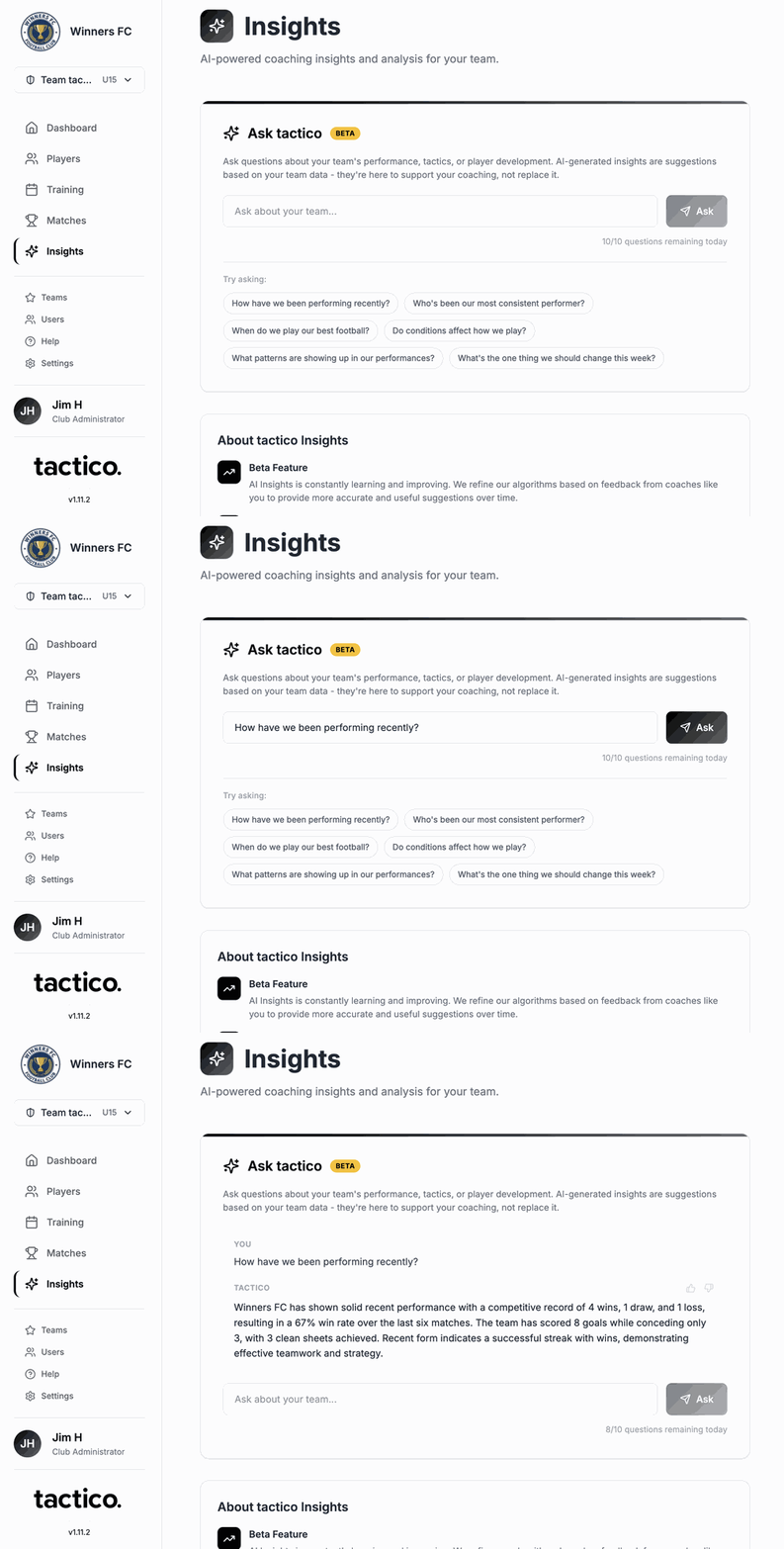
This is the tension grassroots football is now navigating. Either standalone tools like ChatGPT or tools integrated into existing platforms (like Ask tactico) - which analyses match data to surface trends, patterns, and tactical insights - are bringing capabilities to Sunday league pitches that elite clubs only dreamed of a decade ago. For some coaches, this feels like cheating. For others, it's the analyst they always needed but could never afford.
The question isn't whether AI is coming to grassroots football. It's already here. The question is what we do with it.
The Pattern
The resistance to AI in grassroots coaching tends to follow predictable lines: it's cheating, it encourages laziness, it removes the human element that makes coaching meaningful.
These concerns aren't unfounded. Football isn't a spreadsheet. No algorithm can read the anxiety in a 10-year-old's eyes before a penalty, or know that your left-back's confidence collapsed after a bad game last week.
Pep Guardiola made this point with characteristic bluntness - reminding a journalist (asking a stupid question!) that "football isn't a program, it's not artificial intelligence."
Football isn't a program, it's not artificial intelligence.
But here's what the research actually shows.
A 2025 systematic review and meta-analysis published in the Journal of Clinical Medicine of Kazakhstan pooled data from 19 studies examining AI interventions in sports. The findings were clear: AI-based interventions showed a significant positive effect on performance outcomes - with even stronger results for injury prevention and rehabilitation. EU research on grassroots digital tools reaches similar conclusions, endorsing intelligent systems that reduce administrative burden while enhancing coaching and performance.
Another scoping review found that machine learning-enhanced rehabilitation monitoring led to a 28% reduction in reinjury rates compared to conventional approaches.
This isn't about AI coaching football. It's about AI handling the pattern recognition that humans simply can't do at scale - processing weeks of data to spot trends that would otherwise go unnoticed until they became problems.
The key point is that AI should inform, not decide.
The Open University's research into AI in coaching reinforces this distinction. Their studies found that coaches valued AI's capacity to "see alignment issues that are hard to determine with the naked eye" and to carry out routine tasks, "thereby freeing up more of their time to focus elsewhere."
But the same research highlighted critical limitations: AI cannot replicate "the relational, psychological aspects of coaching that foster effective athlete-coach relationships." As one coach put it: "AI would say something technical... this is not what the child needs to hear."
AI would say something technical... this is not what the child needs to hear.
The pattern is clear. AI excels at processing data. Humans excel at processing people. The best outcomes happen when both work together.
The Practice
So what does responsible AI use look like at grassroots level? Based on what we're seeing with Ask tactico in its early days, the benefits fall into three clear categories:
1. Admin reduction
Every grassroots coach knows the feeling. You're trying to remember who's been Player of the Match most often this season. Or what formation you used the last time you played this opponent. Or what notes you made after that frustrating 3-0 defeat in October.
The answer is somewhere - in a notebook, a spreadsheet, a WhatsApp thread, your head. Finding it takes time you don't have.
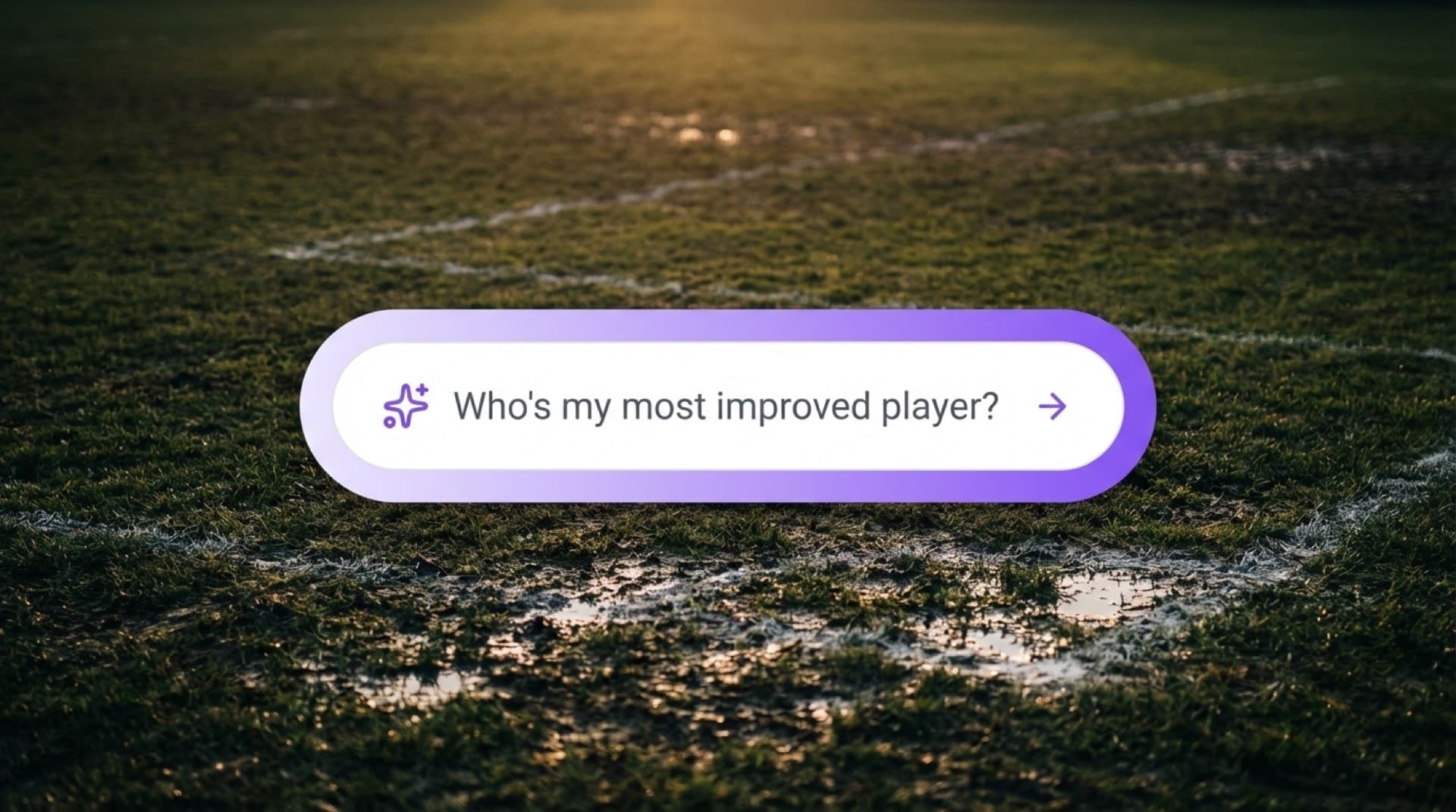
This is where AI earns its keep. Instead of flicking through pages or scrolling through spreadsheets, you just ask: "Who hasn't been Player of the Match this season?" or "What was our result against Rovers last time?" or "Who's been less consistent at training?"
Quick Comparison: AI for Grassroots Football Coaches 2026
| Task | Without AI | With AI / Ask tactico |
|---|---|---|
| Player of the Match history | Flicking through notebooks, searching WhatsApp | "Tell me exactly which players have been Player of the Match this season" |
| Training consistency | Mental recall or manual spreadsheet | "Are any players struggling with training attendance?" |
| Opponent research | Trying to remember last encounter | "Pick three key takeaways from my match report against Bromley FC" |
| Spotting playtime gaps | End-of-season guilt | "When did Sally last play right wing?" |
| Identifying top performers | Gut feel, recency bias | "Who's been our most consistent performer?" |
| Formation analysis | Anecdotal memory, maybe a tally | "Are we better playing 4 at the back?" |
| Conditions and patterns | "We're rubbish in the rain" | "Do conditions affect how we play?" |
| Tactical trends | Hours of video review or spreadsheet work | "What patterns are showing up in our performances?" |
| Weekly focus | Best guess | "What's the one thing we should change this week?" |
It's not revolutionary. It's just... useful. The kind of thing that saves ten minutes here, fifteen minutes there - time that adds up when you're a volunteer fitting coaching around a full-time job and family.
2. Spotting the small things - pattern recognition at scale
Even the best coaches are time-poor. You're managing 16+ players, 30 parents or guardians, weekly fixtures, training sessions, and everything in between. It's a lot to track, and you can be forgiven for missing small patterns that only become obvious in hindsight.
This is where AI shifts from admin tool to development tool.
Training attendance patterns. Starting XI selections over a season. Playtime distribution across matches. These patterns exist in your data - but spotting them manually requires time most grassroots coaches simply don't have.
AI tools can surface these trends: highlighting a player whose attendance has dropped over the past month, or one who's been consistently left out of starting line-ups without anyone quite noticing. Sometimes it's a safeguarding flag. Sometimes it's a development opportunity. Sometimes it's just a prompt to have a conversation you might otherwise have missed.
That's not lazy coaching. That's informed coaching - catching things that would otherwise slip through the cracks.
3. Multi-variable analysis - the analyst in your pocket
Here's the thing: most of us fans, coaches and players love a bit of data. We always have. Whether it's obsessing over Fantasy Premier League stats, refreshing LiveScore for real-time updates, or arguing with pundits about possession percentages - data and insights bring a layer to the game that fans, players, and coaches genuinely enjoy.
The problem at grassroots level has never been interest. It's access.
Fans, coaches, players love data. We always have. The problem at grassroots level has never been interest. It's access.
Even in grassroots football, you're generating hundreds of data points across a season: wins, losses, formations, weather conditions, time of day, home or away, pitch surface, referee, individual player notes. Modern club management systems can help organise this data - but no volunteer coach has time to cross-reference all of it manually.
But patterns exist in that data. Maybe you perform significantly better on grass than 4G. Maybe your 4-3-3 actually underperforms against teams that press high. Maybe morning kick-offs consistently produce worse results than afternoon ones.
A full-time analyst at an elite club would spot these trends. A grassroots coach running on coffee and goodwill probably won't - not because they're not good enough, but because there aren't enough hours in the day.
Ask tactico can analyse all of that rapidly and prompt insights you'd never have time to find yourself. It's not making decisions for you. It's surfacing questions worth asking.
4. Remember what AI can't see
A recent Open University study on AI in coaching found that coaches valued the technology's capacity to "see alignment issues that are hard to determine with the naked eye."
But the same study highlighted critical limitations. AI cannot replicate "the relational, psychological aspects of coaching that foster effective athlete-coach relationships." As one coach put it: "AI would say something technical... this is not what the child needs to hear."
The nervous player who needs encouragement before a penalty. The overconfident one who needs grounding. The one going through a tough time at home whose performance has dropped for reasons no dataset will ever capture.
That's your job. AI handles the patterns. You handle the people.
5. Be transparent with players and guardians
If you're using AI tools to analyse performance, say so. Explain what data you're capturing, how you're using it, and - crucially - that it informs rather than determines your decisions.
This is especially important with young players, where safeguarding and privacy concerns rightly demand careful attention. The research community is increasingly focused on ethical frameworks for AI in youth sport - grassroots coaches should be part of that conversation, not an afterthought.
6. Start small and stay sceptical
You don't need to go all-in overnight. Start with one use case - maybe it's just checking training attendance patterns, or reviewing formations across matches. See if it actually saves time or improves your preparation.
If it doesn't add value, drop it. The goal isn't to become a "data-driven coach." The goal is to become a better-informed one - whether through AI tools, quality coaching content, or structured training - and free up more time for the sport you love.
The Principle
The debate about AI in grassroots football often gets framed as a binary: embrace the future or protect the soul of the game.
This is a false choice.
AI isn't here to replace the coach who shows up at 8am on a freezing Sunday, who knows every player's name and worries about the quiet kid at the back. No technology can replicate the relationship between a good coach and their players - the trust, the intuition, the human connection that makes sport meaningful.
What AI can do is handle the stuff that gets in the way of that relationship. The quick lookups that used to mean digging through notebooks. The pattern recognition across sixteen players that even attentive coaches miss. The multi-variable analysis that would take hours of spreadsheet work to do manually.
Ask tactico is like giving every grassroots coach their own analyst - turning match data into clear trends and insights they can actually use on the training pitch. It doesn't replace coaching; it sharpens it. Helping coaches spot patterns they'd otherwise miss so they can tailor sessions to the real needs of their players.
For the first time, community clubs can tap into the kind of data-driven game intelligence that used to be reserved for elite teams, without needing a full-time analyst department.
AI has become very important to coaches. You can feed it real-time information, it absorbs it, and it offers an opinion more quickly than people watching the game.
An opinion. Not a decision. That distinction matters.
AI in tactico isn't there to make decisions for coaches. It's there to ask better questions of the game - so coaches and players can grow together, match by match.
The coaches who thrive in this new era won't be the ones who blindly trust algorithms. They'll be the ones who use AI to ask better questions - and trust their own judgement to find the answers.
Your Move This Week
Think about the last time you needed to look something up about your team. Maybe it was checking who'd been Player of the Match most often. Or trying to remember what formation worked against a particular opponent. Or wondering which players have been less consistent at training recently.
How long did it take to find the answer? Did you even bother looking, or did you just go with your gut because finding the data felt like more effort than it was worth?
That's the gap AI fills. Not replacing your coaching instincts - just making sure you have information to hand when you need it.
The key is how you capture data in the first place. Notes in a notebook are hard to search, easy to lose, and impossible to analyse at scale. Spreadsheets are better, but still require manual digging. When you capture information in the right team management platform, it's not just stored - it's unlocked. Ready to be queried, cross-referenced, and turned into insight the moment you need it.
That's where the value lies. Not in collecting data for its own sake - but in being able to ask questions of it.
The Bottom Line
AI isn't going to coach your team.
It isn't going to replace the 8am sessions in the rain.
It isn't going to know that your goalkeeper's parents are separating, or that your striker plays better after a quiet word than a loud one.
What it will do - if you let it - is give you back time. Surface patterns you'd otherwise miss. Help you prepare with evidence instead of guesswork.
The game doesn't need robot coaches.
It needs human coaches with better tools.
That's what this is.
Sources & Context
1. Primary: Arsène Wenger interview on AI in football (December 2025)
2. Primary: Pep Guardiola on data-driven coaching
3. Research: Systematic review and meta-analysis: AI interventions in sports - Journal of Clinical Medicine of Kazakhstan, 2025
4. Research: Will we ever be able to trust an AI sports coach? - Open University, July 2025
5. Research: AI in sports biomechanics, wearable technology, and injury prevention - PMC Scoping Review, 2025
6. Supporting: AI applications in sport systematic review - Taylor & Francis, 2025
7. Supporting: AI in elite sports teams - Frontiers in Sports and Active Living, 2024
tactico.
The game, uncompromised.